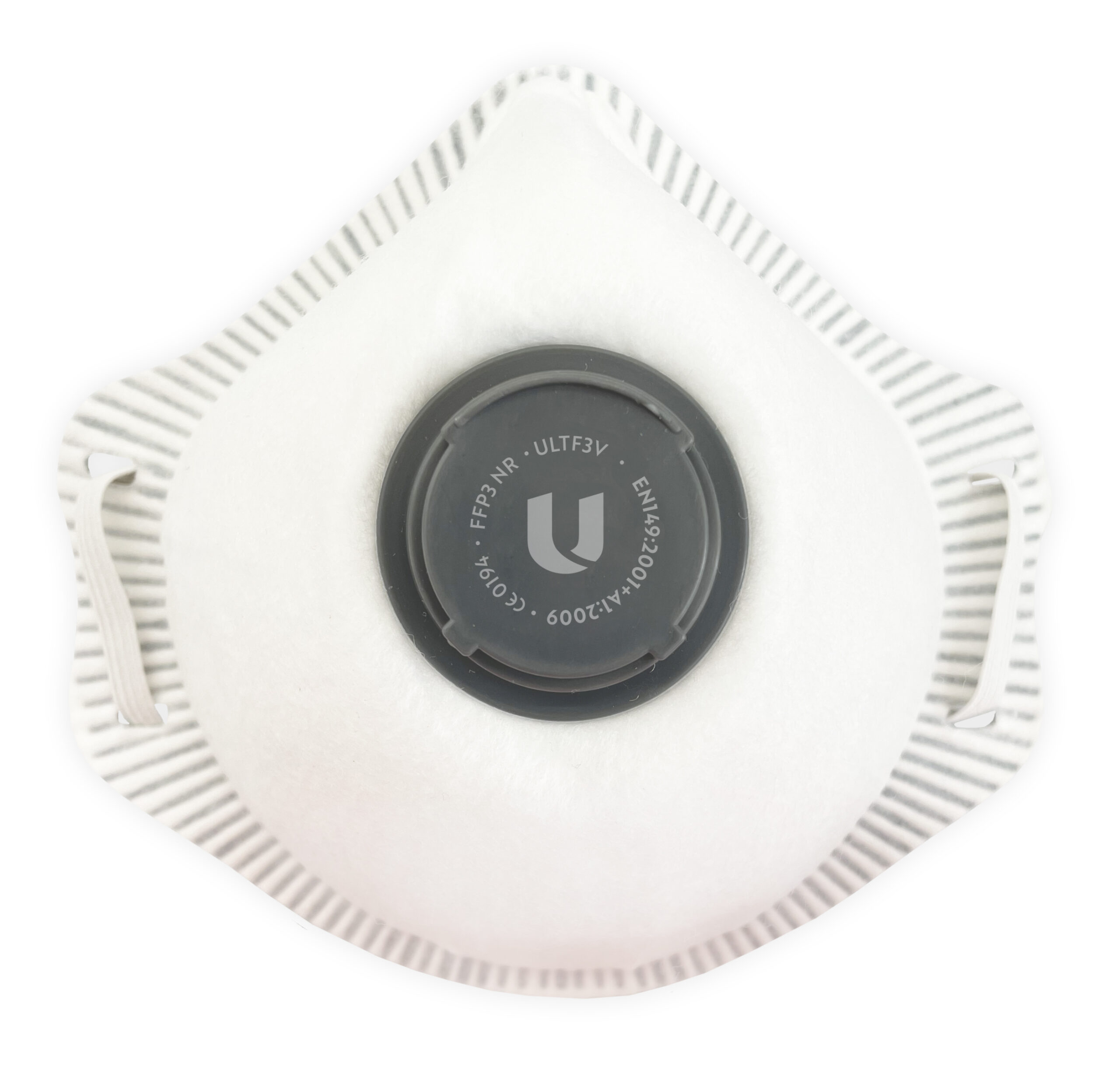
It is hugely important to ensure that your employees are not exposed to hazardous substances at work that could be detrimental to their health. If you simply selected an FFP3 face mask and wore it without first checking whether it properly fits, it would put your health and those around you at risk. Any respiratory protection, such as disposable FFP3 masks, need to be tight-fitting in order to maximise protection.
If your employees are exposed to harmful environments, then it is vital to conduct a mask pre-checking procedure with a face fit test and it is also a legal requirement that employees must be fit tested by a competent person. These tests are essential for workers in industries where the wearer needs to be properly protected against airborne particles. Face fit testing ensures that the mask is correctly and safely fitted to maximise protection.
There are two ways in which a face fit test is usually conducted, these are known as qualitative and quantitative methods.
The qualitative face fit testing method relies on the person’s taste receptors to determine a mask’s effectiveness. The wearer is asked to perform a variety of movements and light exercises that simulate normal working conditions, whilst wearing a hood and mask. A solution is sprayed inside the hood during this process, and if the wearer can taste the solution then the seal of the mask is ineffective. The qualitative method can only be used for fit testing FFP’s (disposable) and half masks.
Quantitative face fit testing uses methods such as particle counting to measure the seal’s effectiveness and quality. The wearer will simulate normal work practices to ascertain the validity of the seal and a device measures the number of particles that enter the mask. This method is suitable for face fit testing FFP3’s, half masks, full face masks including SCBA.
Ready to book your Face Fit Testing with a Fit2Fit Accredited fit tester? Contact Ultimo Safety on 0208 154 7310 or fill out our form here.